欢迎光临~山东绿工新材料科技有限公司
语言选择:
 ∷
∷

∷
 ∷
∷
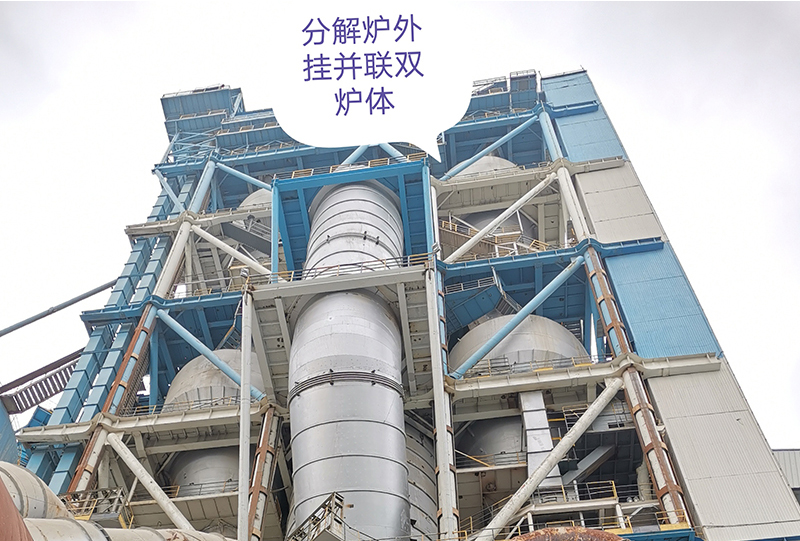
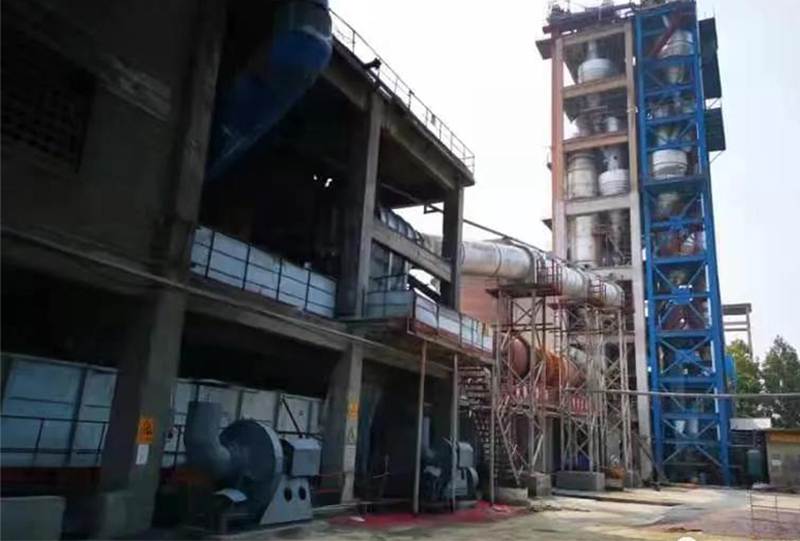
——优化分解炉燃烧室与预热器部分结构提产20%以上
一、技改出发点
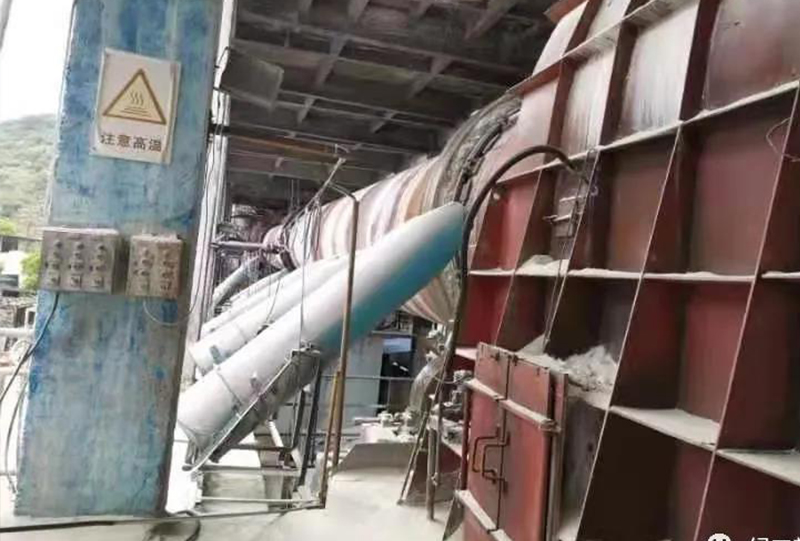
对于窑外分解系统而言,虽目前几乎所有厂家的分解炉出风管都足够长、分解炉容积都足够大,但生产运行中,分解炉出风管的温度一般都高于分解炉炉内温度,有时甚至会出现C5出口温度高于分解炉出风管温度,出现所谓温度倒挂,而温度一旦倒挂,系统便不能再继续注入能量(即不能加风也不能加燃料),系统产量也因此不能再继续提高。导致这个问题的原因肯定是分解炉内燃料燃烧不充分,这不仅使燃料燃尽率降低(即热耗升高),并且增加上部旋风筒堵塞、结皮的风险。而要解决这个问题,除了常规的降低燃料水分细度、提高三次风温与窑尾烟室温度外,增加固体燃料(煤粉或石油焦)在分解炉燃烧室内的触氧机会、优化燃料在分解炉内的燃烧时间与生料停留时间之间的关系成为关键。
二、技术要点分析
1、常温下的固体燃料在一次风的输送下进入分解炉燃烧室后,面临的环境既有来自窑尾携带少量过剩空气的高温烟气,也有来自三次风管的热空气;既有来自C4下料管的换热生料,也有少量分解炉燃料燃烧后以及少量生料分解后产生的CO2。在这个复杂的环境中,高温与富氧显然是燃料在分解炉燃烧室尽可能迅速开始燃烧以及尽可能使燃烧率增大的有利条件,而生料在烟气中的分布浓度以及CO2含量却是阻止燃烧的不利条件。因此,为使燃料在炉内充分燃烧,从燃料一进入燃烧室开始,就得想办法发挥有利条件、阻止不利条件。
2、虽然富氧环境有利于燃烧,但由于相对NOx排放的限制,不论从窑内还是三次风管、不论从一次风还是漏风,输入系统的氧含量不可能提供太多,因此,在燃料一进入分解炉燃烧室时,如何在有限的O2供应条件下使燃料不受干扰地迅速接触氧气,成为燃烧率提高的必要条件。
3、一般分解炉中,生料在炉内的停留时间为3s左右,而固体燃料(煤粉或石油焦)在炉内的燃烧时间却在4s-5s之间;而固体燃料的粉磨细度比生料的细度要细很多、其密度也小,所以,燃料一旦在炉内没有完全燃烧,其未燃烧部分在炉内的停留时间要小于生料的停留时间,也即其未燃烧部分要先于生料逃出分解炉,这势必导致其在C5或C4甚至C3内燃烧产生结皮堵塞现象。因此,需尽可能让燃料“烧在前”、而让生料“步其后”。
4、窑尾高温与三次风高温是分解炉燃烧室燃烧效率提高的首要条件。三次风高温需由窑头高温来保证,这与篦冷机的换热效率有关。而窑尾高温往往导致窑尾烟室频繁结皮,特别对于液相量较大的配料方案而言。窑尾烟室结皮,使窑尾过载截面风速加大、阻力加大,这肯定使携带高温热焓的窑尾烟气量减少,而这显然不利于分解炉燃烧室燃烧效率的提高。
5、技改后的生产实践表明,旋风筒出风管内风速最高达到24m/s时,生产仍可以稳定进行。而一般生产线由于分解炉内燃料燃烧效率不够高、分解炉内不敢注入太多能量而使产量不能得到有效提高,这便导致旋风筒出风管风速不可能达到22m/s,造成这一现象的原因不是因为旋风筒以及出风管的能力不足,而是因为分解炉的燃料燃烧效率不够高。
由上述知,科学优化提高分解炉燃烧室燃烧效率,可使熟料产量再次提高。
三、具体技改方案:
1、改造分解炉燃烧室结构,延长燃料在燃烧室内运动行程;提高C4下料点位置以及改造其撒料方式,让出燃料燃烧空间。这两步改动的目的是为了优化燃料在分解炉内的燃烧时间与生料停留时间之间的关系,使燃料“烧在前”、而让生料“步其后”。
2、改造窑尾烟室内部的砌筑形式,采用防结皮微晶板与纳米隔热板,缩小40%耐火材料厚度,不仅使窑尾烟室空间加大,并且生产中不再产生高温结皮而使热工制度稳定从而可以再次稳步提高产量。
3、改造扩大上部旋风筒部分进风口(即下级旋风筒出风管出风口),使其满足提产后生产要求。
山东绿工新材料科技有限公司
公司网站:www.lgxcltech.com
公司公众号:绿工新材料
Tel:(+86)18353360679
Only change the structure of calciner combustion chamber, feed end chamber and some points of preheater , and the clinker output will be increased by more than 20%
Ⅰ Starting point of technological transformation
For the decomposition system outside the kiln, although the outlet air duct of almost all manufacturers is long enough and the volume of the decomposition furnace is large enough, the temperature of the outlet air pipe of the decomposition furnace is generally higher than that of the decomposition furnace in production and operation. Sometimes, the C5 outlet temperature is higher than the outlet temperature of the decomposition furnace, and the so-called temperature is inverted, and the temperature once is inverted, the system can no longer inject energy (i.e. no wind or fuel), and the system output cannot be increased any more. The reason for this problem is that the fuel combustion in the decomposition furnace is not enough, which not only reduces the fuel burn-off rate (i.e. the heat consumption increases), but also increases the risk of blockage and skin formation of the upper cyclone. In order to solve this problem, in addition to reducing the fineness of fuel , increasing the temperature of the tertiary air and the temperature of the feed end chamber , it is crucial to increase the oxygen contact opportunity of solid fuel (pulverized coal or petroleum coke) in the combustion chamber of the decomposition furnace, and optimize the relationship between the combustion time of the fuel in the decomposition furnace and the residence time of raw materials.
Ⅱ Analysis of key technical points
1、 When the solid fuel at normal temperature enters the calciner combustion chamber under the transportation of primary air, the environment it faces is not only the high temperature flue gas with a small amount of excess air from the kiln tail, but also the hot air from the tertiary air duct; There are not only the heat exchange raw material from C4 discharge pipe, but also a small amount of CO2produced by combustion of calciner fuel and decomposition of raw material. In this complex environment, high temperature and oxygen enrichment are obviously favorable conditions for fuel to start combustion as quickly as possible in the calciner combustion chamber and increase the combustion rate as much as possible, while the distribution concentration of raw meal in flue gas and CO2content are unfavorable conditions to prevent combustion. Therefore, in order to make the fuel fully burn in the furnace, we must find ways to give full play to the favorable conditions and prevent the unfavorable conditions as soon as the fuel enters the combustion chamber.
2、 Although the oxygen enriched environment is conducive to combustion, due to the limitation of relative NOx emission, it is impossible to supply too much oxygen into the system no matter from the kiln or the tertiary air duct, or from the primary air or the air leakage. Therefore, when the fuel enters the calciner combustion chamber, how to make the fuel quickly contact with oxygen without interference under the limited O2supply condition, It becomes a necessary condition to improve the burning rate.
3、 In general, the residence time of raw meal in the calciner is about 3s, while the combustion time of solid fuel (pulverized coal or petroleum coke) in the calciner is between 4s and 5s; The grinding fineness of solid fuel is much finer than that of raw meal, and its density is also small. Therefore, once the fuel is not completely burned in the furnace, the residence time of unburned part in the furnace is less than that of raw meal, that is, the unburned part must escape from the decomposition furnace before raw meal, which will inevitably lead to the phenomenon of skin blockage in C5 or C4 or even C3 combustion. Therefore, it is necessary to make the fuel "burn first" and the raw meal "follow" as far as possible.
4、 The high temperature of kiln end and tertiary air is the primary condition to improve the combustion efficiency of calciner combustion chamber. The high temperature of the tertiary air should be guaranteed by the high temperature of the kiln head, which is related to the heat exchange efficiency of the grate cooler. However, the high temperature at the end of the kiln often leads to frequent scaling in the feed end chamber, especially for the batching scheme with large liquid volume. The scaling of the feed end chamber will increase the wind speed and resistance of the overload section at the end of the kiln, which will certainly reduce the amount of flue gas carrying high temperature enthalpy, which is obviously not conducive to the improvement of the combustion efficiency of the calciner combustion chamber.
5、 The production practice after the technical transformation shows that the production can still be carried out stably when the maximum wind speed in the outlet pipe of the cyclone reaches 24m /s. However, the general production line can not effectively improve the output due to the low fuel combustion efficiency in the calciner and the fear of injecting too much energy into the calciner, which leads to that the wind speed of the cyclone outlet duct can not reach 22m/s. The reason for this phenomenon is not because of the insufficient capacity of the cyclone and the outlet duct, but because the fuel combustion efficiency of the calciner is not high enough.
It can be seen from the above that the clinker output can be increased again by scientifically optimizing and improving the combustion efficiency of calciner combustion chamber.
ⅢSpecific technical transformation scheme
1、 Change the structure of the calciner combustion chamber to extend the movement of fuel in the combustion chamber; In order to make fuel burning space, the position of C4 blanking point should be improved and the spreading method should be improved. The purpose of these two changes is to optimize the relationship between the combustion time of fuel in the calciner and the residence time of raw meal, so that the fuel can be "burned first" and the raw meal can be "followed after".
2、 By reforming the masonry form of the feed end chamber, adopting the anti scaling microcrystalline board and nano heat insulation board, and reducing the thickness of the refractory by 40%, which not only increases the space of the feed end chamber , but also make the thermal system stablility without high-temperature scaling in the production, so that the output can be steadily increased again.
3、 Change and expand the inlet of the upper cyclone (that is, the outlet of the duct of the lower cyclone) to meet the production requirements.
Only change the structure of calciner combustion chamber, feed end chamber and some point of preheater , and the clinker output will be increased by more than 20%——We have achieved success. Welcome to visit the site.
Shandong Green Engineering New Materials Technology Co.,Ltd
Company website: www.lgxcltech.com
Email: gudaofa@163.com
Wechat:gudaofa
联系人:绿工新材料
手机:+86 18353360679
电话:+86 13953348649
邮箱:gudaofa@163.com
地址: 山东省淄博市张店区马尚街道办事处心环东路6号润德大厦B座1109室