欢迎光临~山东绿工新材料科技有限公司
语言选择:
 ∷
∷

∷
 ∷
∷
——加设不对称预热器提产50%以上
一、技改出发点
日益严苛的环保错峰强制停产、限排措施使企业年开工率不足60%,环保政策束缚企业产能的结果就是使生产成本上升、工业产品价格上涨,从而使社会整体生产生活成本压力剧增。保护环境没有错,但企业追求利益最大化的目的也没有错。我们的出发点是:在开工率不足60%的错峰强制停产要求下、在有害气体年排放总量再次下降50%的前提下,实现100%开工率下的产能以及高产能下有害气体年排放总量减半的目标!
半年时间干一年的活,在遵守产业政策的前提下(窑规格不能改动),我们唯一能做的就是想尽办法提高窑的单位台时产量。
在目前所有新型干法窑外分解系统中,当入窑物料分解率达到90%以上时、当窑速达到3.8rpm以上时、当熟料在窑烧成带内填充率达到13%时,窑系统产量达到最高。而目前所有新型干法窑外分解系统所配置的预热器以及分解炉规格均按窑内烧成带物料填充率7%—11%来开展设计,这便导致窑内容积热效率得不到充分发挥,使窑系统产量达不到极致。我们提出改造的技术出发点是:在回转窑不做任何改动、原预热器系统基本不做改动的前提下,通过优化调整预热器与分解炉局部结构,再次提高预热器以及分解炉的生产能力,使窑内物料填充率提高到13%,将熟料产量提高到最大、将熟料热耗降至最低。
二、例证分析
对Φ4.7m*74m日产5000t熟料的窑外分解系统而言,
当入窑物料分解率达到90%以上,窑速达到3.8rpm—4.2rpm时,物料从窑尾来到窑头的时间约30min(物料平均移动速度为2.467m/min),烧成带长度约4.7*5=23.5m,物料在烧成带内的平均停留时间为23.5/2.467=9.526min。已知烧成带耐火砖厚度为220mm,烧成带内窑皮平均厚度为200mm,所以烧成带内有效断面积为:(4.7-0.22*2-0.2*2)^2*π/4=11.7m2,如果物料填充率达到13%,则烧成带内熟料产量为:11.7*13%*23.5*1.35(熟料标准立升重1.35kg/L)=48.25t,此时熟料产量为(48.25/9.526)*60=304t/h,即达到7300t/d
对Φ4.0m*60m日产3000t熟料的窑外分解系统而言,
当入窑物料分解率达到90%以上,窑速达到3.8rpm—4.2rpm时,物料从窑尾来到窑头的时间约30min(物料平均移动速度为2m/min),烧成带长度约4.0*5=20m,物料在烧成带内的平均停留时间为20/2=10min。已知烧成带耐火砖厚度为200mm,烧成带内窑皮平均厚度为200mm,所以烧成带内有效断面积为:(4.0-0.2*2-0.2*2)^2*π/4=8.04m2,如果物料填充率达到13%,则烧成带内熟料产量为:8.04*13%*20*1.35(熟料标准立升重1.35kg/L)=28.2t,此时熟料产量为(28.2/10)*60=169.3t/h,即达到4063t/d
对Φ3.5m*54m日产1800t熟料的窑外分解系统而言,
当入窑物料分解率达到90%以上,窑速达到3.8rpm—4.2rpm时,物料从窑尾来到窑头的时间约30min(物料平均移动速度为1.8m/min),烧成带长度约3.5*5=17.5m,物料在烧成带内的平均停留时间为17.5/1.8=9.722min。已知烧成带耐火砖厚度为180mm,烧成带内窑皮平均厚度为200mm,所以烧成带内有效断面积为:(3.5-0.18*2-0.2*2)^2*π/4=5.89m2,如果物料填充率达到13%,则烧成带内熟料产量为:5.89*13%*17.5*1.35(熟料标准立升重1.35kg/L)=18.08t,此时熟料产量为(18.08/9.722)*60=111.64t/h,即达到2679t/d
对Φ3.0m*48m日产1000t熟料的窑外分解系统而言,
当入窑物料分解率达到90%以上,窑速达到3.8rpm—4.2rpm时,物料从窑尾来到窑头的时间约35min(物料平均移动速度为1.37m/min),烧成带长度约3.0*5=15m,物料在烧成带内的平均停留时间为15/1.37=10.95min。已知烧成带耐火砖厚度为150mm,烧成带内窑皮平均厚度为150mm,所以烧成带内有效断面积为:(3.0-0.15*2-0.15*2)^2*π/4=4.522m2,如果物料填充率达到13%,则烧成带内熟料产量为:4.522*13%*15*1.35(熟料标准立升重1.35kg/L)=11.9t,此时熟料产量为(11.9/10.95)*60=65.2t/h,即达到1564t/d
对Φ2.7m*42m日产450t熟料的窑外分解系统而言,
当入窑物料分解率达到90%以上,窑速达到3.8rpm—4.2rpm时,物料从窑尾来到窑头的时间约40min(物料平均移动速度为1.05m/min),烧成带长度约2.7*5=13.5m,物料在烧成带内的平均停留时间为13.5/1.05=12.85min。已知烧成带耐火砖厚度为150mm,烧成带内窑皮平均厚度为150mm,所以烧成带内有效断面积为:(2.7-0.15*2-0.15*2)^2*π/4=3.46m2,如果物料填充率达到13%,则烧成带内熟料产量为:3.46*13%*13.5*1.35(熟料标准立升重1.35kg/L)=8.2t,此时熟料产量为(8.2/12.85)*60=38.27t/h,即达到918.6t/d
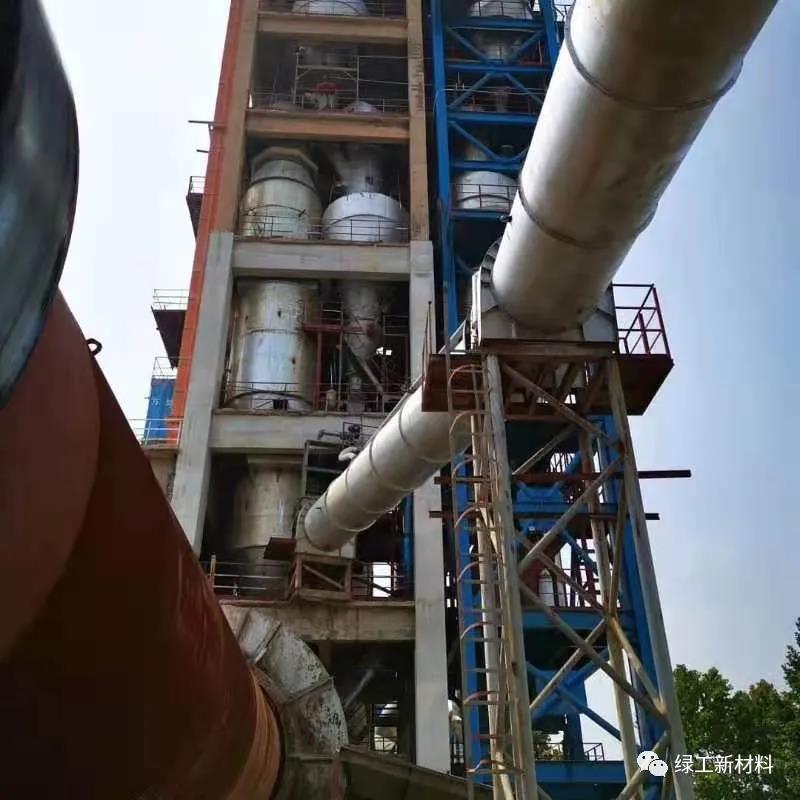
技改后,除得到以上例证结果外,还有如下技改优势效果:
当烧成带内物料填充率达到13%、熟料产量达到最大时,熟料单位热耗将下降5%;
由于烧成带内物料填充率增大,留给烟气通行的空间缩小,使窑内过剩空气减少,窑尾富余氧气浓度降低,使NOx排放量减少;同时,窑内增长的料层吸收了窑内由于燃烧火焰峰值产生的热量,使窑内过高高温下(火焰尖峰处)的N2与O2的氧化反应减少,再次减少了燃烧级NOx的生成。也即技改后,NOx排放将大幅度降低。
对窑头窑尾带低温余热发电系统的生产线而言,产量增加后,发电量也相应增大。
对于油井水泥熟料和白水泥熟料而言,由于配料中液相量低,煅烧中熟料热耗较普通水泥熟料偏高(油井水泥熟料烧成温度1550℃、白水泥熟料烧成温度1650℃),因此其烧成带内熟料最大填充率不可能达到13%,但却可以达到10%—11%,这也比当前窑外分解系统生产油井水泥熟料、生产白水泥熟料的产量提高了42%—57%(当前窑外分解系统生产油井水泥熟料与生产白水泥熟料的窑内填充率只有7%左右)。
比较几种窑型(均为新型干法窑外分解)在技改前与技改后的生产结果:
|
窑型 |
生产熟料种类 |
产量(t/d) |
热耗(kcal/kg-cl) |
||
|
技改前 |
技改后 |
技改前 |
技改后 |
||
|
Φ4.7m*74m |
普通水泥熟料 |
5500 |
7300 |
645 |
612 |
|
Φ4.0m*60m |
普通水泥熟料 |
3300 |
4050 |
790 |
750 |
|
Φ4.0m*60m |
油井水泥熟料 |
2500 |
3300 |
850 |
805 |
|
Φ4.0m*60m |
白水泥熟料 |
2100 |
3000 |
1000 |
950 |
|
Φ3.5m*54m |
普通水泥熟料 |
1800 |
2680 |
850 |
805 |
|
Φ3.5m*54m |
油井水泥熟料 |
1500 |
2150 |
900 |
855 |
|
Φ3.5m*54m |
白水泥熟料 |
1200 |
1950 |
1050 |
1000 |
|
Φ3.0m*48m |
普通水泥熟料 |
1200 |
1750 |
880 |
820 |
|
Φ3.0m*48m |
油井水泥熟料 |
1000 |
1450 |
930 |
880 |
|
Φ3.0m*48m |
白水泥熟料 |
600 |
1150 |
1100 |
1000 |
|
Φ2.7m*42m |
普通水泥熟料 |
550 |
920 |
920 |
875 |
|
Φ2.7m*42m |
油井水泥熟料 |
420 |
720 |
950 |
905 |
|
Φ2.7m*42m |
白水泥熟料 |
360 |
550 |
1150 |
1100 |
三、方案具体执行
1、由于技改后,熟料产量有较大幅度提升,煤粉制备与生料制备系统需做相应调整,需保证技改后高产量下的煤粉供应与生料供应。
2、窑内物料填充率增大后,要保证增加了的物料能在窑内烧成,则首先需要保证增大投料量后的入窑物料分解率始终满足>90%的要求:
对于窑尾已经是双系列的预热器而言,在投料量增大后,部分旋风筒以及出风管的断面风速有可能超标,需对不合理超标部分进行扩容扩径与阻力的重新调整平衡;产量增大后,分解炉的热力场也发生变化,也需对其进行改造。
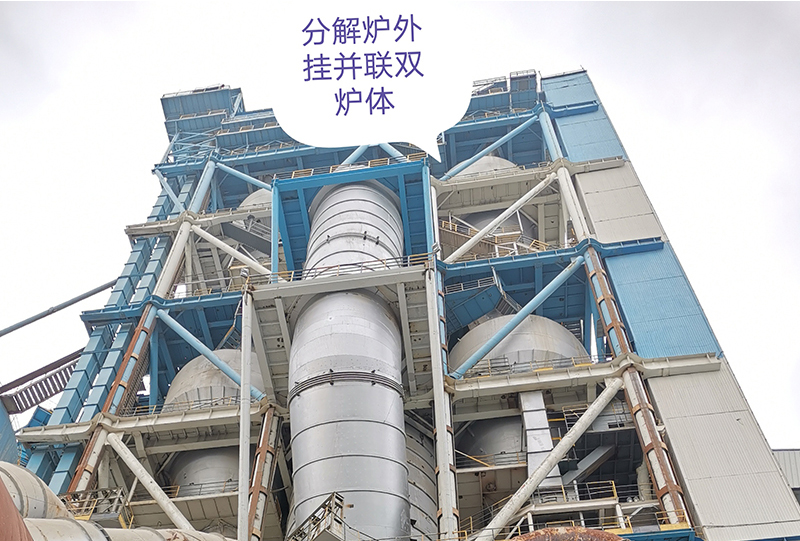
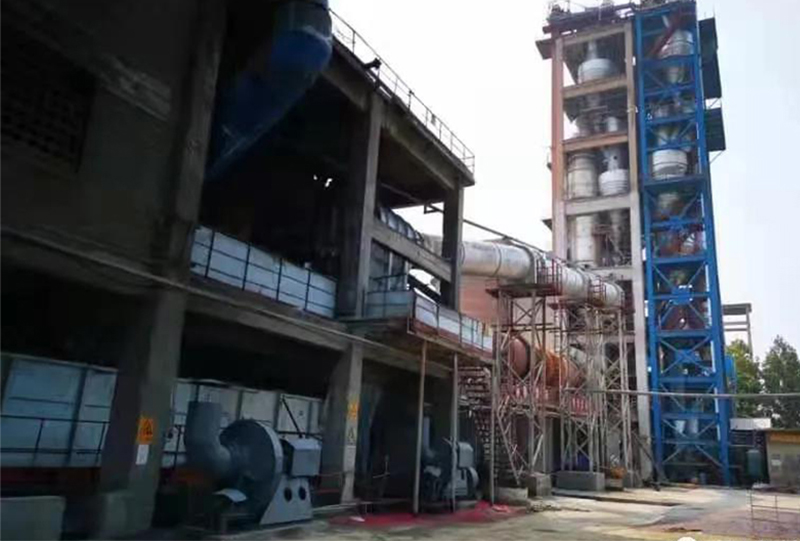
对于窑尾只是单系列的预热器而言,增加产量后,原预热器能力肯定达不到新增产量要求,此时尽量不再对原预热器进行改造处理,可增加一个不对称流场预热器(与原预热器并联),该预热器的能力仅满足新增产能的需要,由于其产能规模、流场参数、安装位置与原预热器并不对称,所以称为“不对称流场预热器”;分解炉由于在原预热器系列中,产量增大后,分解炉的热力场也发生变化,也需对其进行改造。
3、窑尾废气与飞灰处理系统
对于窑尾已经是双系列的预热器而言,在对预热器部分结构以及分解炉进行改造后,其后部原废气处理系统的能力肯定不能满足技改后要求,此处只需再并入一个满足新增产能的废气处理系统即可,无需再对原系统进行调整。
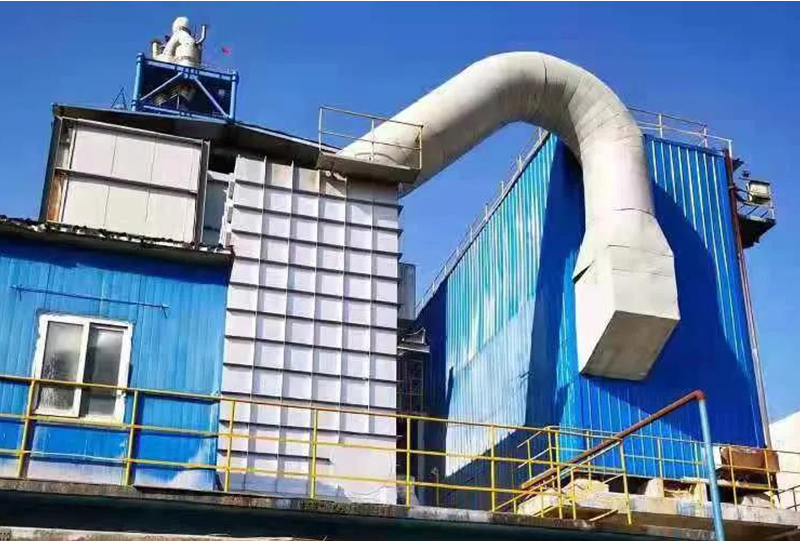
对于窑尾只是单系列的预热器而言,由于增加了一个不对称流场预热器,可在这个不对称流场预热器的后部直接串接一个只适合新增产能的废气处理系统即可。
4、窑头篦冷机(对第五代篦冷机而言)
由于技改后,窑头产量增加,窑内煅烧与分解炉燃烧需要的二次风量与三次风量均增加,篦床料层厚度增加,因此需对窑头篦冷机进行调整处理。
5、窑头罩、窑尾烟室与三次风管
窑头二次风量与二次风温在技改后都加大了,需对窑头罩进行改造处理;
窑内产量增加,窑内过载风量加大,并且对于加设了不对称流场预热器的系统而言,窑尾烟室多了下料点,因此窑尾烟室需进行改造处理;
三次风管也调整加大,以满足分解炉新增产能需求。
6、动力配电增加
篦冷机传动调整、窑尾废气处理系统增加、煤粉制备与生料制备系统调整,会使动力配电增加。
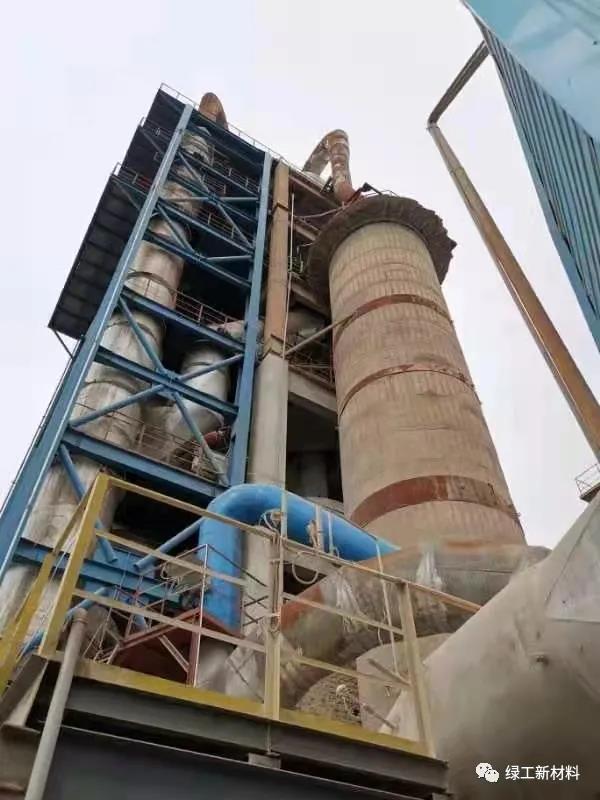
将窑内物料填充率提高到13%,将窑系统产量提高到极致,努力实现超高产与超级低排放,半年时间干一年的活,再不用担心环保政策压力——这不是梦想,我们已取得成功,欢迎现场考察。
山东绿工新材料科技有限公司
公司网站:www.lgxcltech.com
公司公众号:绿工新材料
Tel:(+86)18353360679
New technologies for greatly saving energy, reducing consumption and increasing production of cement kiln with calciner system
--- The addition of asymmetric double series preheater can increase clinker output by more than 50%
Ⅰ The starting point of technical reformation
The increasingly stringent measures of environmental protection, peak shifting, forced shutdown and emission restriction make the annual operating rate of enterprises less than 60%. The result of environmental protection policies restricting the production capacity of enterprises is that the production cost rises and the price of industrial products rises, thus increasing the pressure on the overall production and living cost of society. There is nothing wrong with protecting the environment, but neither is there anything wrong with a company's pursuit of profit maximization. Our starting point is: in the operating rate of less than 60% of the peak forced shutdown requirements, in the premise of the annual emission of harmful gases decreased by 50% again, to achieve 100% of the production capacity and high production capacity under the annual emission of harmful gases halved goal!
Half a year to complete one year's work, under the premise of abiding by the industrial policy (kiln specifications can not be changed), the only way we can go is to try our best to improve the output per hour.
Among all the new dry process decomposition systems, the output of the kiln system reaches the highest when the decomposition rate of materials into the kiln reaches more than 90%, when the kiln speed reaches more than 3.8rpm, and when the filling rate of clinker in the kiln firing zone reaches 13%. At present, all the preheater and calciner specifications of the new dry kiln decomposition system are designed according to the material filling rate of the kiln firing zone of 7%-11%, which results in that the volume thermal efficiency in the kiln cannot be fully utilized, and the output of the kiln system cannot reach the maximum. We put forward the transformation of technology starting point is: On the premise that the rotary kiln is not changed and the original preheater system is basically unchanged, the production capacity of preheater and calciner is improved again by optimizing and adjusting the local structure of preheater and calciner, so that the material filling rate in the kiln is increased to 13%, the clinker output is increased to the maximum, and the clinker heat consumption is reduced to the minimum.
Ⅱ Illustration analysis
For the decomposition system of Φ4.7m*74m kiln (5000t/d clinker):
When the decomposition rate of materials into the kiln reaches more than 90% and the kiln speed reaches 3.8rpm-4rpm, the time of materials from the kiln end to the kiln head is about 30min (the average moving speed of materials is 2.467m/min), and the length of firing belt is about 4.7*5=23.5m. The average residence time of the material in the sintering zone is 23.5/2.467=9.526min. It is known that the thickness of firebrick in firing zone is 220mm, and the average thickness of kiln skin in firing zone is 200mm, so the effective section area in firing zone is: (4.7-0.22*2-0.2*2) ^2*π/4=11.7m2. If the material filling rate reaches 13%, the clinker yield in firing zone is: 11.7*13%*23.5*1.35 (weight of clinker per liter: 1.28kg/L) =48.25t. At this time, the output of clinker is (48.25/9.526)*60=304t/h, that is, 7300t/d.
For the decomposition system of Φ4.0m*60m(3000t/d clinker)
When the decomposition rate of materials into the kiln reaches more than 90% and the kiln speed reaches 3.8rpm-4rpm, the time of materials from the end of the kiln to the kiln head is about 30min (the average moving speed of materials is 2m/min), the length of firing zone is about 4.0*5=20m, and the average residence time of materials in the firing zone is 20/2=10min. It is known that the thickness of refractory brick in firing zone is 200mm, and the average thickness of kiln skin in firing zone is 200mm, so the effective section area in firing zone is: (4.0-0.2*2-0.2*2) ^2*π/4=8.04m2. If the material filling rate reaches 13%, the clinker yield in firing zone is: 8.04*13%*20*1.28 (standard lift weight of clinker: 1.28kg/L) =26.75t, at this time, the yield of clinker is (26.75/10)*60=160.54t/h, that is, 3853t/d.
For Φ3.5m*54m kiln(1800t/d clinker)
When the decomposition rate of materials into the kiln reaches more than 90% and the kiln speed reaches 3.8rpm-4rpm, the time of materials from the end of the kiln to the kiln head is about 30min (the average moving speed of materials is 1.8m/min), and the length of firing belt is about 3.5*5=17.5m. The average residence time of the material in the sintering zone was 17.5/1.8=9.722min. It is known that the thickness of firebrick in firing zone is 180mm, and the average thickness of kiln skin in firing zone is 200mm, so the effective section area in firing zone is: (3.5-0.18*2-0.2*2) ^2*π/4=5.89m2. If the material filling rate reaches 13%, the clinker yield in firing zone is: 5.89*13%*17.5*1.28 (standard lift weight of clinker: 1.28kg/L) =17.15t, at this time, the output of clinker is (17.15/9.722)*60=105.85t/h, that is, 2540t/d.
For Φ3.0m*48m kin(1000t/d clinker)
When the decomposition rate of materials into the kiln reaches more than 90% and the kiln speed reaches 3.8rpm-4rpm, the time of materials from the end of the kiln to the kiln head is about 35min (the average moving speed of materials is 1.37m/min), the length of firing zone is about 3.0*5=15m, and the average residence time of materials in the firing zone is 15/1.37=10.95min. It is known that the thickness of firebrick in firing zone is 150mm, and the average thickness of kiln skin in firing zone is 150mm, so the effective sectional area in firing zone is: (3.0-0.15*2-0.15*2) ^2*π/4=4.522m2. If the material filling rate reaches 13%, the clinker yield in firing zone is: 4.522*13%*15*1.28 (standard lift weight of clinker: 1.28kg/L) =11.28t, and the yield of clinker is (11.28/10.95)*60=61.8t/h, that is, 1483t/d.
For the decomposition system of Φ2.7m*42m kiln(450t/d clinker)
When the decomposition rate of materials into the kiln reaches more than 90% and the kiln speed reaches 3.8rpm-4rpm, the time of materials from the end of the kiln to the kiln head is about 40min (the average moving speed of materials is 1.05m/min), and the length of firing belt is about 2.7*5=13.5m. The average residence time of the material in the sintering zone was 13.5/1.05=12.85min. It is known that the thickness of firebrick in firing zone is 150mm, and the average thickness of kiln skin in firing zone is 150mm, so the effective sectional area in firing zone is (2.7-0.15*2-0.15*2) ^2*π/4=3.46m2. If the material filling rate reaches 13%, the clinker yield in firing zone is: 3.46*13%*13.5*1.28 (standard lift weight of clinker: 1.28kg/L) =7.77t. At this time, the yield of clinker is (7.77/12.85)*60=36.29t/h, that is 871t/d.
After technical reformation, in addition to the above example results, there are also the following advantages:
When the material filling rate reaches 13% and the clinker output reaches the maximum, the heat consumption of clinker will decrease by 5%.
Due to the increase of the material filling rate in the sintering zone, the space left for the flue gas to pass is reduced, so that the excess air in the kiln is reduced, the surplus oxygen concentration at the kiln end is reduced, and the NOx emission is reduced; At the same time, the increased material layer in the kiln absorbs the heat generated by the peak value of combustion flame in the kiln, which reduces the oxidation reaction of N2 and O2 at too high temperature (at the flame peak) in the kiln, and reduces the generation of combustion grade NOx again. That is to say, after the technical transformation, NOx emission will be greatly reduced.
For the production line with low-temperature waste heat power generation system at kiln head and kiln end, the power generation will increase with the increase of output.
For oil well cement clinker and white cement clinker, due to the low liquid content in ingredients, the heat consumption of clinker in calcination is higher than that of ordinary cement clinker (the firing temperature of oil well cement clinker is 1550℃, and the firing temperature of white cement clinker is 1650℃). Therefore, the maximum filling rate of clinker in the firing zone is impossible to reach 13%, but it can reach 10%-11%. This is also a 42-57% increase over the production of oil well cement clinker produced by original off-kiln decomposition system and the production of white cement clinker (the original kiln filling rate of oil well cement clinker produced by off-kiln decomposition system and white cement clinker produced is only about 7%).
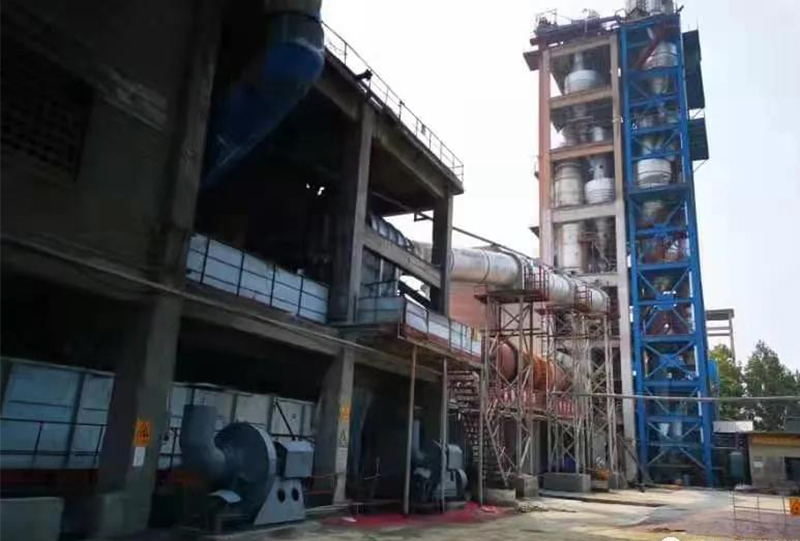
Comparing the production results of several kiln types before and after technical improvement (all the kiln is dry rotary kiln with calciner):
|
Kiln type |
Clinker type |
Clinker Output (t/d) |
Heat consumption(kcal/kg-cl) |
||
|
Before |
After |
Before |
After |
||
|
Φ4.7m*74m |
Ordinary cement |
5500 |
7300 |
645 |
612 |
|
Φ4.0m*60m |
Ordinary cement |
3300 |
4050 |
790 |
750 |
|
Φ4.0m*60m |
Oil well cement |
2500 |
3300 |
850 |
805 |
|
Φ4.0m*60m |
White cement |
2100 |
3000 |
1000 |
950 |
|
Φ3.5m*54m |
Ordinary cement |
1800 |
2680 |
850 |
805 |
|
Φ3.5m*54m |
Oil well cement |
1500 |
2150 |
900 |
855 |
|
Φ3.5m*54m |
White cement |
1200 |
1950 |
1050 |
1000 |
|
Φ3.0m*48m |
Ordinary cement |
1200 |
1750 |
880 |
820 |
|
Φ3.0m*48m |
Oil well cement |
1000 |
1450 |
930 |
880 |
|
Φ3.0m*48m |
White cement |
600 |
1150 |
1100 |
1000 |
|
Φ2.7m*42m |
Ordinary cement |
550 |
920 |
920 |
875 |
|
Φ2.7m*42m |
Oil well cement |
420 |
720 |
950 |
905 |
|
Φ2.7m*42m |
White cement |
360 |
550 |
1150 |
1100 |
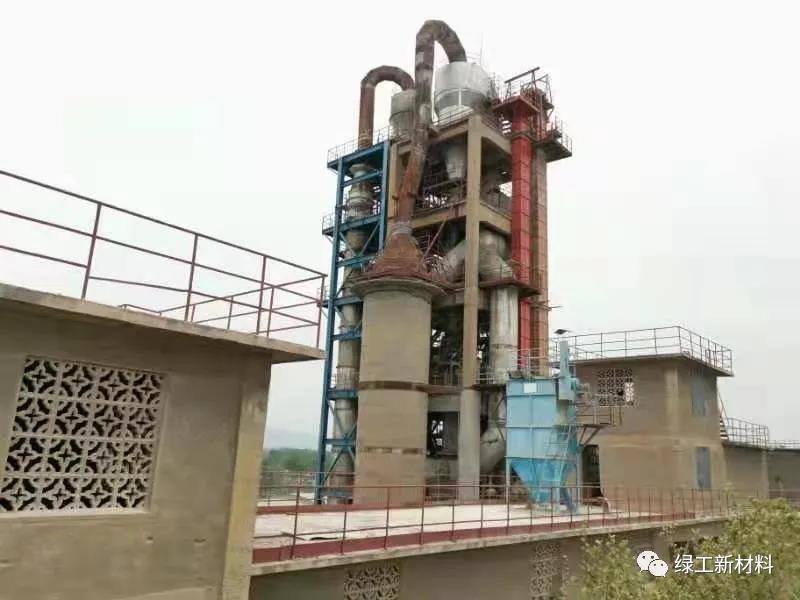
III Specific implementation of the program
1、As the clinker output has been greatly improved after technical reform, pulverized coal preparation and raw material preparation system need to be adjusted accordingly to ensure the supply of pulverized coal and raw material under high yield after technical reform.
2、 After the material filling rate in the kiln increases, to ensure that the increased material can be fired in the kiln, it is necessary to ensure that the decomposition rate of the material into the kiln after the increase of the feeding amount always meets the requirements of > 90% :
For the double-series preheater at the end of the kiln, after the increase of feeding quantity, the sectional wind speed of some cyclone cylinders and air outlet pipes may exceed the standard, so it is necessary to readjust and balance the capacity and diameter expansion and resistance of the unreasonable part. With the increase of output, the thermal field of the calciner also changes, so it is necessary to transform it.
For the preheater with a single series at the end of the kiln, the capacity of the original preheater cannot meet the requirements of the new output after the output is increased. At this time, the original preheater should not be reformed as much as possible. An asymmetric flow field preheater (in parallel with the original preheater) can be added, and the capacity of the preheater can only meet the needs of the new production capacity. Because its capacity scale, flow field parameters, installation position and the original preheater are not symmetric, so it is called "asymmetric flow field preheater"; Due to the increase of output in the original preheater series of the calciner, the thermal field of the calciner also changes, so it needs to be reformed.
3、Kiln end exhaust gas and dust treatment system
For the preheater at the end of the kiln, which has already been a double-series, after the transformation of part of the structure of the preheater and the calciner, the capacity of the original exhaust gas treatment system at the back part certainly cannot meet the requirements after technical modification. Here, it is only necessary to integrate an exhaust gas treatment system that can meet the new capacity, and there is no need to adjust the original system.
For the single-series preheater at the end of the kiln, an asymmetric flow field preheater is added, and a waste gas treatment system suitable for new capacity can be directly connected to the rear of the asymmetric flow field preheater.
4. Kiln head grate cooler (for the fifth generation grate cooler)
As the output of kiln head increases after technical reform, the secondary air volume and the tertiary air volume required for calcination and combustion in calciner kiln increase, and the thickness of grate bed material increases, the grate cooler at kiln head needs to be adjusted and treated.
5、Kiln head cover, feed end chamber and tertiary air ducts
The secondary air volume and secondary air temperature of kiln head are increased after technical modification, so it is necessary to transform the kiln head cover.
The output in the kiln increases, the overload air volume in the kiln increases, and for the system with asymmetric flow field preheater, the feed end chamber has more feeding points, so the feed end chamber needs to be reformed and treated.
The tertiary air duct is also adjusted and enlarged to meet the new capacity demand of the calciner.
6、 Power distribution increased
Adjustment of grate cooler transmission, increase of exhaust gas treatment system at kiln end, and adjustment of pulverized coal preparation and raw materials preparation system will increase power distribution.
Increase the materials filling rate in the kiln to 13%, increase the output of the kiln system to the extreme, strive to achieve super high output and super low emission, accomplish one year’s work within half a year, no longer have to worry about the pressure of environmental protection policy —— this is not a dream, we have achieved success, welcome on-site inspection.
Shandong Green Engineering New Materials Technology Co.,Ltd
Company website: www.lgxcltech.com
Email: gudaofa@163.com
Wechat:gudaofa
联系人:绿工新材料
手机:+86 18353360679
电话:+86 13953348649
邮箱:gudaofa@163.com
地址: 山东省淄博市张店区马尚街道办事处心环东路6号润德大厦B座1109室