Welcome: Shandong Green Engineering New Materials Technology Co., Ltd.
Language:
 ∷
∷

∷
 ∷
∷
New technology of carbon neutralization in kiln system
——Using petroleum coke and biomass fuel, the output of white cement clinker is increased by more than 25% by reforming the structure of calciner combustion chamber
Using biomass fuel instead of fossil energy for large-scale industrial production is the most effective way of "carbon neutralization"! Because the combustion of ecological vegetation is a negative emission: compared with the natural degradation of greenhouse gas emissions, biomass combustion can reduce 20.344 tons of carbon dioxide emissions per ton; By subtracting 1.33 tons of carbon dioxide emissions from biomass combustion process itself, 19.014 tons of carbon dioxide emissions equivalent can be achieved per ton of biomass combustion.
Although petroleum coke has high calorific value and no ash pollution after combustion, which greatly improves the whiteness of white cement clinker, due to its low volatile, poor flammability, slow combustion time and high temperature viscosity of alkaline potassium and sodium added to neutralize sulfur in petroleum coke, the output of kiln system can not be steadily improved. Biomass fuel is mainly composed of cell wall structure (such as husk, sawdust, etc.), and its element composition is mainly composed of cellulose such as C, h, O. the combustion products do not contain nitrogen oxides and sulfur dioxide, so the combustion is cleaner; At the same time, the volatile content of biomass fuel is as high as 65%, which is very easy to burn, and the ash content after combustion is very low. Therefore, adding biomass fuel (such as rice husk) during the combustion of petroleum coke (or low volatile fuel) can greatly change the combustion efficiency in the calciner and kiln, which not only increases the clinker yield, but also makes the alkaline potassium sodium material with high liquid phase and high viscosity more stable in the calcination, Make the system more stable in the high-yield range (high combustion efficiency will make the high liquid phase material burn better, and the output is easier to improve. At the same time, the friction in the material will increase, which will also reverse the phenomenon of crust blocking and ring formation of high liquid phase material, and make the production more stable under High-yield).
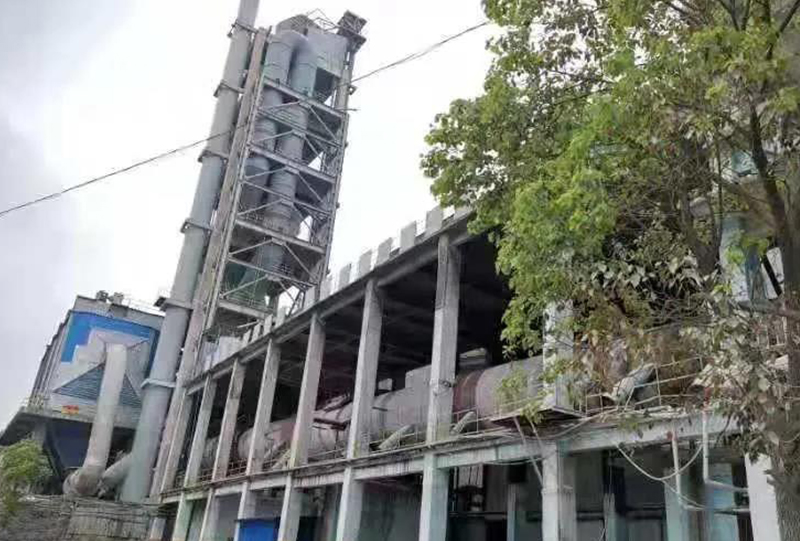
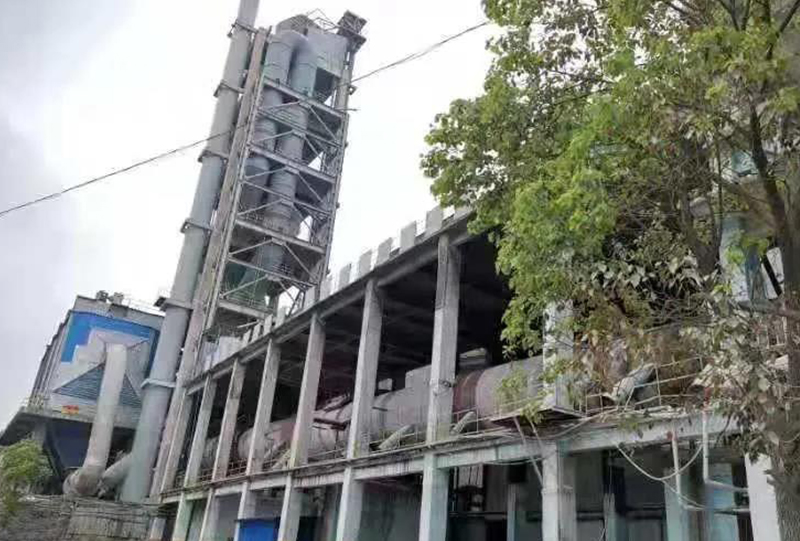
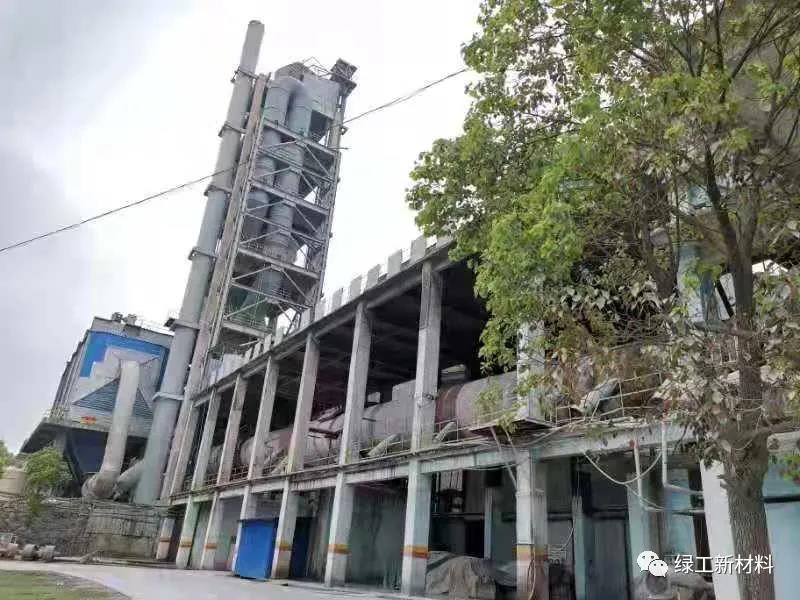
The main equipment of clinker production line of Jiangxi MYS White cement plant is Φ 3.5m × 54m kiln with RSP calciner. The former production line was 1500t /d ordinary cement clinker production line. Later, after partial transformation of grate cooler at kiln head, it was changed to produce white cement clinker. At the beginning of the period, the output of white cement clinker was 1000t / d. After adopting the new technology of petroleum coke + biomass fuel (husk) and reforming the structure of SB chamber of precalciner, the production line has made breakthrough technical progress in the near future on the premise that the preheater has not been greatly changed
1、 The output of clinker reaches 1800t /d;
2、 The whiteness of clinker is more than 89%;
3、 The early strength of clinker in three days is more than 40MPa;
Analysis and summary of the plant's breakthrough technical achievements, mainly due to the following aspects.
1、 In order to reduce the calcination temperature, low sulfur alkali ratio, high alumina and calcium fluoride liquid phase
proportioning were used (the sum of alumina, potassium oxide, sodium oxide and calcium fluoride in clinker was
higher than that in conventional proportioning);
2、 In order to prevent the blocking of preheater skin and the formation of kiln back ring caused by high alkali and hig
metal liquid phase, it is bound to increase the silicon rate to increase the internal friction of the material on the
premise of ensuring the clinker saturation ratio, but considering the burnability of the material, the silicon rate can not
be increased without limit, so the second way to prevent the long ring of skin is to increase the amount of material
involved in the friction;
3、 With the increase of the output, the only way to go is to increase the decomposition rate of the material into the kiln
under high yield;
4、 The combustion efficiency of the fuel in the conventional decomposition furnace is not very high (so enough travel is
provided to supply the combustion space and decomposition reaction time). For the petroleum coke with low volatile
content, the combustion efficiency after entering the furnace is lower. How to maximize the combustion efficiency in
the furnace under the premise of high concentration of material gas ratio and the material "firmly tracking locked in
the furnace" to complete the decomposition, become the key technology;
5、 The measures we have taken are: the timely intervention of biomass fuel to improve the flammability of petroleum
coke (the volatile content of biomass fuel is more than 60%, and the dry biomass fuel will burn immediately when
encountering open fire); The division of multi-point and multi-stage combustion zone and the injection of multi-point
and multi-stage biomass fuel are used to "firmly track" the incompletely burned petroleum coke and the
uncooke raw meal;
6、 The combustion of kiln head also needs the intervention of biomass fuel, so that the flame of petroleum coke with
low volatile will not move backward, and the burning zone will be controlled in front of the kiln, so that the
temperature after the kiln will not be too high and the high liquid material will form a circle behind the kiln;
Example 2
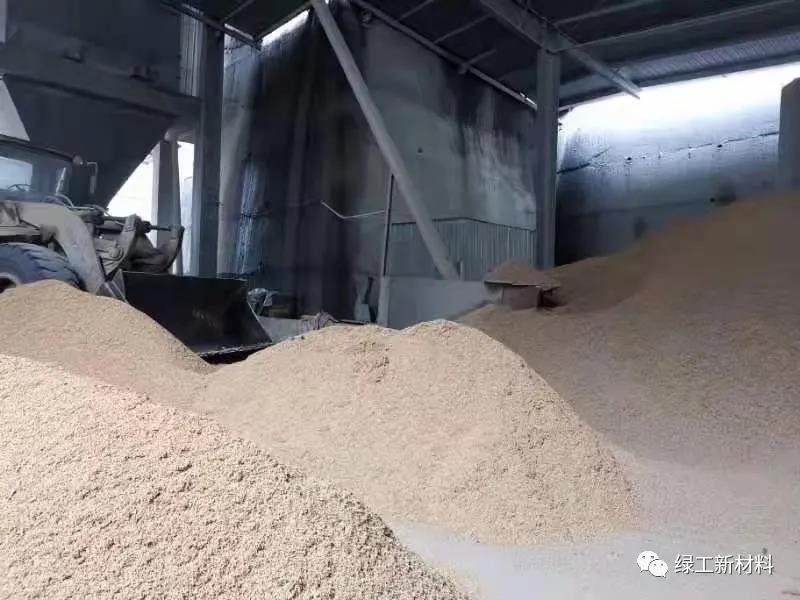
The kiln specification of Jiangxi MKB White Cement Co., Ltd. is Φ 3m × After being transformed into an out of kiln decomposition kiln and using 100% petroleum coke as fuel, although the whiteness and strength of clinker have been greatly improved, the output of clinker has been hovering at 800 t / d. After using millet husk as additional fuel, the combustion efficiency in calciner and kiln has been greatly improved. The clinker output has not only increased to 1000t / D, the alumina content in clinker has also increased to more than 3.2%, the sum value of potassium oxide and sodium oxide in clinker has also increased to more than 0.75%, and the early strength of clinker has also been greatly improved.
The use of biomass fuel in low volatile fuels (such as petroleum coke) not only changes the combustion efficiency, but also improves the clinker output. The biggest change is the clean calcination itself (reduction of nitrogen oxides and sulfur dioxide), as well as the substantial reduction of CO2 emission equivalent: take the 1000t /d white cement clinker production line as an example, Since the CO2 emission equivalent of burning biomass fuel is - 19.014t CO2 / t biofuel, the CO2 emission equivalent of each ton of clinker is reduced by ((1100 / 7500) * 20% * 19.014) / 0.9 = 62%, among which 1100 is the average heat consumption of clinker burning, 7500 is the calorific value of blended fuel after mixing 20% biomass fuel, and 0.9 is the CO2 emission equivalent without using biomass fuel.
CO2 emissions reduced by 62%! This is a very considerable number, which also brings more huge economic and social benefits.
Shandong Green Engineering New Materials Technology Co.,Ltd
Company website: www.lgxcltech.com
Email: gudaofa@163.com
Wechat:gudaofa
Contact: gudaofa
Phone: +86 18353360679
Tel: +86 13953348649
Email: gudaofa@163.com
Add: Room 1109, Block B, Runde Building, No. 6, Xinhuan East Road, Mashang Street Office, Zhangdian District, Zibo City, Shandong