Welcome: Shandong Green Engineering New Materials Technology Co., Ltd.
Language:
 ∷
∷

∷
 ∷
∷
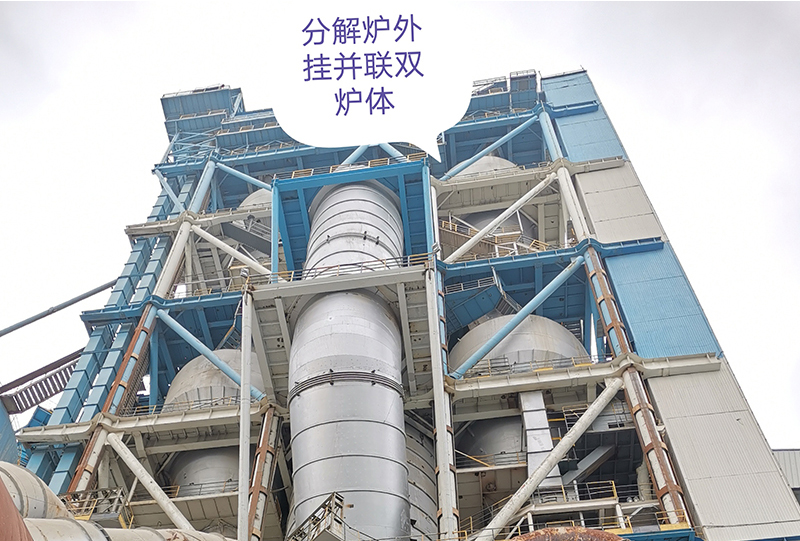
New technologies for greatly saving energy, reducing consumption and increasing production of cement kiln with calciner system
--- The addition of asymmetric double series preheater can increase clinker output by more than 50%
Ⅰ The starting point of technical reformation
The increasingly stringent measures of environmental protection, peak shifting, forced shutdown and emission restriction make the annual operating rate of enterprises less than 60%. The result of environmental protection policies restricting the production capacity of enterprises is that the production cost rises and the price of industrial products rises, thus increasing the pressure on the overall production and living cost of society. There is nothing wrong with protecting the environment, but neither is there anything wrong with a company's pursuit of profit maximization. Our starting point is: in the operating rate of less than 60% of the peak forced shutdown requirements, in the premise of the annual emission of harmful gases decreased by 50% again, to achieve 100% of the production capacity and high production capacity under the annual emission of harmful gases halved goal!
Half a year to complete one year's work, under the premise of abiding by the industrial policy (kiln specifications can not be changed), the only way we can go is to try our best to improve the output per hour.
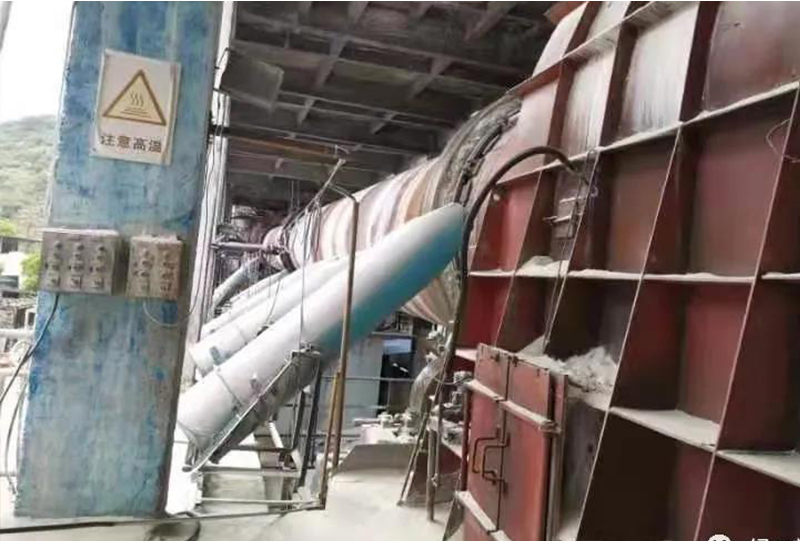
Among all the new dry process decomposition systems, the output of the kiln system reaches the highest when the decomposition rate of materials into the kiln reaches more than 90%, when the kiln speed reaches more than 3.8rpm, and when the filling rate of clinker in the kiln firing zone reaches 13%. At present, all the preheater and calciner specifications of the new dry kiln decomposition system are designed according to the material filling rate of the kiln firing zone of 7%-11%, which results in that the volume thermal efficiency in the kiln cannot be fully utilized, and the output of the kiln system cannot reach the maximum. We put forward the transformation of technology starting point is: On the premise that the rotary kiln is not changed and the original preheater system is basically unchanged, the production capacity of preheater and calciner is improved again by optimizing and adjusting the local structure of preheater and calciner, so that the material filling rate in the kiln is increased to 13%, the clinker output is increased to the maximum, and the clinker heat consumption is reduced to the minimum.
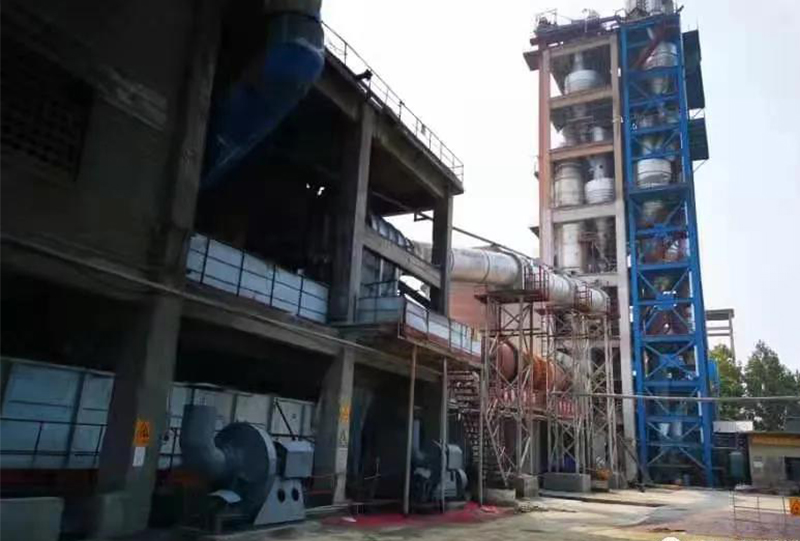
Ⅱ Illustration analysis
For the decomposition system of Φ4.7m*74m kiln (5000t/d clinker):
When the decomposition rate of materials into the kiln reaches more than 90% and the kiln speed reaches 3.8rpm-4rpm, the time of materials from the kiln end to the kiln head is about 30min (the average moving speed of materials is 2.467m/min), and the length of firing belt is about 4.7*5=23.5m. The average residence time of the material in the sintering zone is 23.5/2.467=9.526min. It is known that the thickness of firebrick in firing zone is 220mm, and the average thickness of kiln skin in firing zone is 200mm, so the effective section area in firing zone is: (4.7-0.22*2-0.2*2) ^2*π/4=11.7m2. If the material filling rate reaches 13%, the clinker yield in firing zone is: 11.7*13%*23.5*1.35 (weight of clinker per liter: 1.28kg/L) =48.25t. At this time, the output of clinker is (48.25/9.526)*60=304t/h, that is, 7300t/d.
For the decomposition system of Φ4.0m*60m(3000t/d clinker)
When the decomposition rate of materials into the kiln reaches more than 90% and the kiln speed reaches 3.8rpm-4rpm, the time of materials from the end of the kiln to the kiln head is about 30min (the average moving speed of materials is 2m/min), the length of firing zone is about 4.0*5=20m, and the average residence time of materials in the firing zone is 20/2=10min. It is known that the thickness of refractory brick in firing zone is 200mm, and the average thickness of kiln skin in firing zone is 200mm, so the effective section area in firing zone is: (4.0-0.2*2-0.2*2) ^2*π/4=8.04m2. If the material filling rate reaches 13%, the clinker yield in firing zone is: 8.04*13%*20*1.28 (standard lift weight of clinker: 1.28kg/L) =26.75t, at this time, the yield of clinker is (26.75/10)*60=160.54t/h, that is, 3853t/d.
For Φ3.5m*54m kiln(1800t/d clinker)
When the decomposition rate of materials into the kiln reaches more than 90% and the kiln speed reaches 3.8rpm-4rpm, the time of materials from the end of the kiln to the kiln head is about 30min (the average moving speed of materials is 1.8m/min), and the length of firing belt is about 3.5*5=17.5m. The average residence time of the material in the sintering zone was 17.5/1.8=9.722min. It is known that the thickness of firebrick in firing zone is 180mm, and the average thickness of kiln skin in firing zone is 200mm, so the effective section area in firing zone is: (3.5-0.18*2-0.2*2) ^2*π/4=5.89m2. If the material filling rate reaches 13%, the clinker yield in firing zone is: 5.89*13%*17.5*1.28 (standard lift weight of clinker: 1.28kg/L) =17.15t, at this time, the output of clinker is (17.15/9.722)*60=105.85t/h, that is, 2540t/d.
For Φ3.0m*48m kin(1000t/d clinker)
When the decomposition rate of materials into the kiln reaches more than 90% and the kiln speed reaches 3.8rpm-4rpm, the time of materials from the end of the kiln to the kiln head is about 35min (the average moving speed of materials is 1.37m/min), the length of firing zone is about 3.0*5=15m, and the average residence time of materials in the firing zone is 15/1.37=10.95min. It is known that the thickness of firebrick in firing zone is 150mm, and the average thickness of kiln skin in firing zone is 150mm, so the effective sectional area in firing zone is: (3.0-0.15*2-0.15*2) ^2*π/4=4.522m2. If the material filling rate reaches 13%, the clinker yield in firing zone is: 4.522*13%*15*1.28 (standard lift weight of clinker: 1.28kg/L) =11.28t, and the yield of clinker is (11.28/10.95)*60=61.8t/h, that is, 1483t/d.
For the decomposition system of Φ2.7m*42m kiln(450t/d clinker)
When the decomposition rate of materials into the kiln reaches more than 90% and the kiln speed reaches 3.8rpm-4rpm, the time of materials from the end of the kiln to the kiln head is about 40min (the average moving speed of materials is 1.05m/min), and the length of firing belt is about 2.7*5=13.5m. The average residence time of the material in the sintering zone was 13.5/1.05=12.85min. It is known that the thickness of firebrick in firing zone is 150mm, and the average thickness of kiln skin in firing zone is 150mm, so the effective sectional area in firing zone is (2.7-0.15*2-0.15*2) ^2*π/4=3.46m2. If the material filling rate reaches 13%, the clinker yield in firing zone is: 3.46*13%*13.5*1.28 (standard lift weight of clinker: 1.28kg/L) =7.77t. At this time, the yield of clinker is (7.77/12.85)*60=36.29t/h, that is 871t/d.
After technical reformation, in addition to the above example results, there are also the following advantages:
When the material filling rate reaches 13% and the clinker output reaches the maximum, the heat consumption of clinker will decrease by 5%.
Due to the increase of the material filling rate in the sintering zone, the space left for the flue gas to pass is reduced, so that the excess air in the kiln is reduced, the surplus oxygen concentration at the kiln end is reduced, and the NOx emission is reduced; At the same time, the increased material layer in the kiln absorbs the heat generated by the peak value of combustion flame in the kiln, which reduces the oxidation reaction of N2 and O2 at too high temperature (at the flame peak) in the kiln, and reduces the generation of combustion grade NOx again. That is to say, after the technical transformation, NOx emission will be greatly reduced.
For the production line with low-temperature waste heat power generation system at kiln head and kiln end, the power generation will increase with the increase of output.
For oil well cement clinker and white cement clinker, due to the low liquid content in ingredients, the heat consumption of clinker in calcination is higher than that of ordinary cement clinker (the firing temperature of oil well cement clinker is 1550℃, and the firing temperature of white cement clinker is 1650℃). Therefore, the maximum filling rate of clinker in the firing zone is impossible to reach 13%, but it can reach 10%-11%. This is also a 42-57% increase over the production of oil well cement clinker produced by original off-kiln decomposition system and the production of white cement clinker (the original kiln filling rate of oil well cement clinker produced by off-kiln decomposition system and white cement clinker produced is only about 7%).
Comparing the production results of several kiln types before and after technical improvement (all the kiln is dry rotary kiln with calciner):
|
Kiln type |
Clinker type |
Clinker Output (t/d) |
Heat consumption(kcal/kg-cl) |
||
|
Before |
After |
Before |
After |
||
|
Φ4.7m*74m |
Ordinary cement |
5500 |
7300 |
645 |
612 |
|
Φ4.0m*60m |
Ordinary cement |
3300 |
4050 |
790 |
750 |
|
Φ4.0m*60m |
Oil well cement |
2500 |
3300 |
850 |
805 |
|
Φ4.0m*60m |
White cement |
2100 |
3000 |
1000 |
950 |
|
Φ3.5m*54m |
Ordinary cement |
1800 |
2680 |
850 |
805 |
|
Φ3.5m*54m |
Oil well cement |
1500 |
2150 |
900 |
855 |
|
Φ3.5m*54m |
White cement |
1200 |
1950 |
1050 |
1000 |
|
Φ3.0m*48m |
Ordinary cement |
1200 |
1750 |
880 |
820 |
|
Φ3.0m*48m |
Oil well cement |
1000 |
1450 |
930 |
880 |
|
Φ3.0m*48m |
White cement |
600 |
1150 |
1100 |
1000 |
|
Φ2.7m*42m |
Ordinary cement |
550 |
920 |
920 |
875 |
|
Φ2.7m*42m |
Oil well cement |
420 |
720 |
950 |
905 |
|
Φ2.7m*42m |
White cement |
360 |
550 |
1150 |
1100 |
III Specific implementation of the program
1、As the clinker output has been greatly improved after technical reform, pulverized coal preparation and raw material preparation system need to be adjusted accordingly to ensure the supply of pulverized coal and raw material under high yield after technical reform.
2、 After the material filling rate in the kiln increases, to ensure that the increased material can be fired in the kiln, it is necessary to ensure that the decomposition rate of the material into the kiln after the increase of the feeding amount always meets the requirements of > 90% :
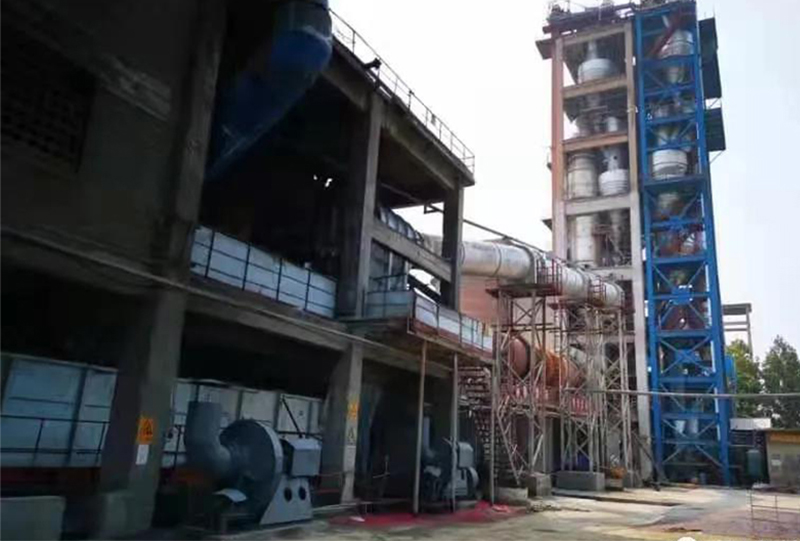
For the double-series preheater at the end of the kiln, after the increase of feeding quantity, the sectional wind speed of some cyclone cylinders and air outlet pipes may exceed the standard, so it is necessary to readjust and balance the capacity and diameter expansion and resistance of the unreasonable part. With the increase of output, the thermal field of the calciner also changes, so it is necessary to transform it.
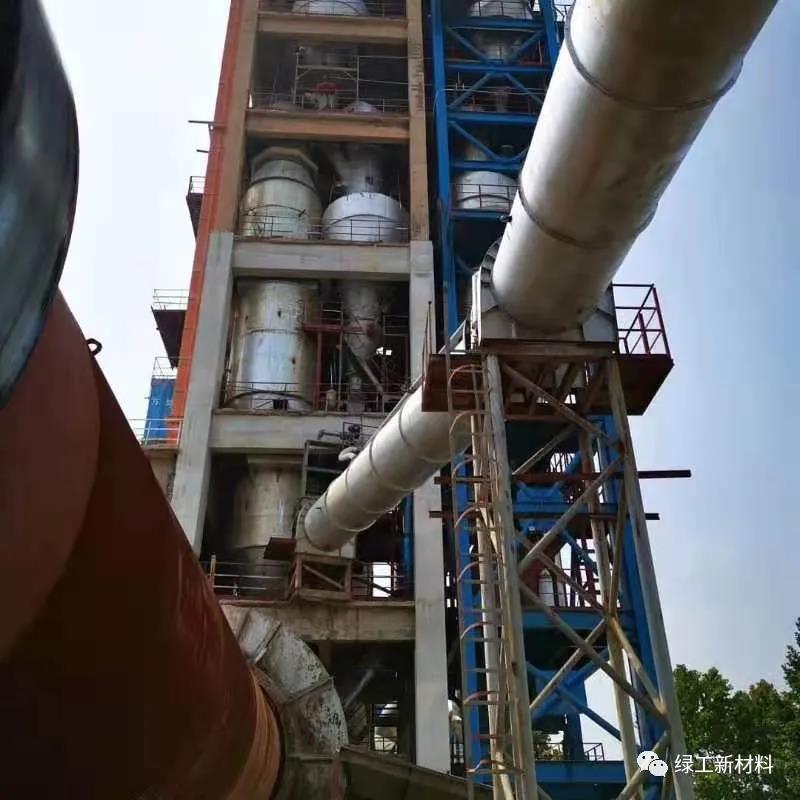
For the preheater with a single series at the end of the kiln, the capacity of the original preheater cannot meet the requirements of the new output after the output is increased. At this time, the original preheater should not be reformed as much as possible. An asymmetric flow field preheater (in parallel with the original preheater) can be added, and the capacity of the preheater can only meet the needs of the new production capacity. Because its capacity scale, flow field parameters, installation position and the original preheater are not symmetric, so it is called "asymmetric flow field preheater"; Due to the increase of output in the original preheater series of the calciner, the thermal field of the calciner also changes, so it needs to be reformed.
3、Kiln end exhaust gas and dust treatment system
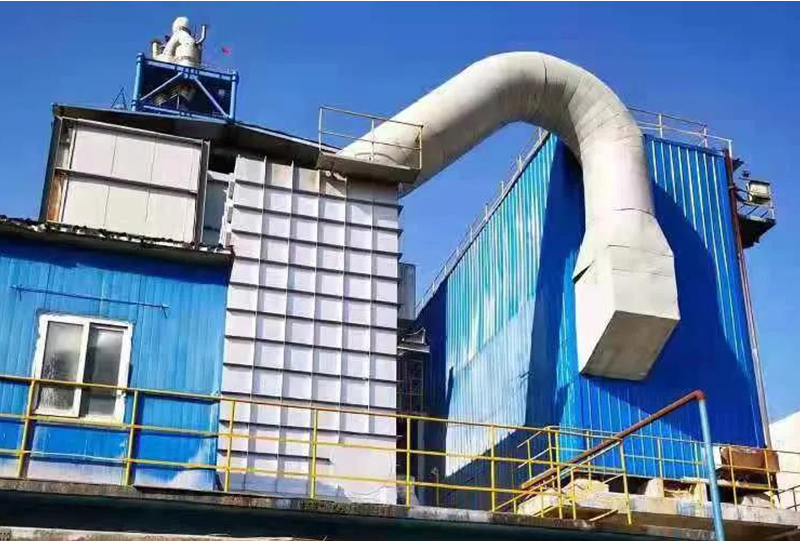
For the preheater at the end of the kiln, which has already been a double-series, after the transformation of part of the structure of the preheater and the calciner, the capacity of the original exhaust gas treatment system at the back part certainly cannot meet the requirements after technical modification. Here, it is only necessary to integrate an exhaust gas treatment system that can meet the new capacity, and there is no need to adjust the original system.
For the single-series preheater at the end of the kiln, an asymmetric flow field preheater is added, and a waste gas treatment system suitable for new capacity can be directly connected to the rear of the asymmetric flow field preheater.
4. Kiln head grate cooler (for the fifth generation grate cooler)
As the output of kiln head increases after technical reform, the secondary air volume and the tertiary air volume required for calcination and combustion in calciner kiln increase, and the thickness of grate bed material increases, the grate cooler at kiln head needs to be adjusted and treated.
5、Kiln head cover, feed end chamber and tertiary air ducts
The secondary air volume and secondary air temperature of kiln head are increased after technical modification, so it is necessary to transform the kiln head cover.
The output in the kiln increases, the overload air volume in the kiln increases, and for the system with asymmetric flow field preheater, the feed end chamber has more feeding points, so the feed end chamber needs to be reformed and treated.
The tertiary air duct is also adjusted and enlarged to meet the new capacity demand of the calciner.
6、 Power distribution increased
Adjustment of grate cooler transmission, increase of exhaust gas treatment system at kiln end, and adjustment of pulverized coal preparation and raw materials preparation system will increase power distribution.
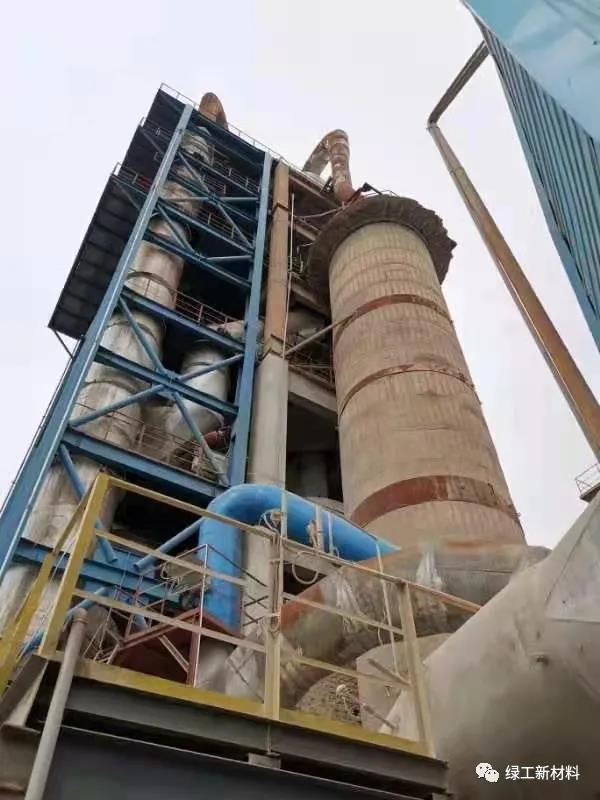
Increase the materials filling rate in the kiln to 13%, increase the output of the kiln system to the extreme, strive to achieve super high output and super low emission, accomplish one year’s work within half a year, no longer have to worry about the pressure of environmental protection policy —— this is not a dream, we have achieved success, welcome on-site inspection.
Shandong Green Engineering New Materials Technology Co.,Ltd
Company website: www.lgxcltech.com
Email: gudaofa@163.com
Wechat:gudaofa
Contact: gudaofa
Phone: +86 18353360679
Tel: +86 13953348649
Email: gudaofa@163.com
Add: Room 1109, Block B, Runde Building, No. 6, Xinhuan East Road, Mashang Street Office, Zhangdian District, Zibo City, Shandong