Welcome: Shandong Green Engineering New Materials Technology Co., Ltd.
Language:
 ∷
∷

∷
 ∷
∷
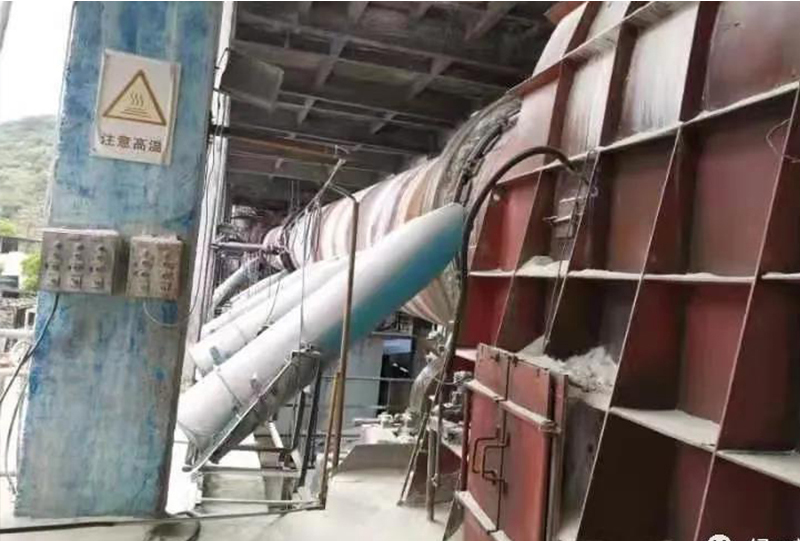
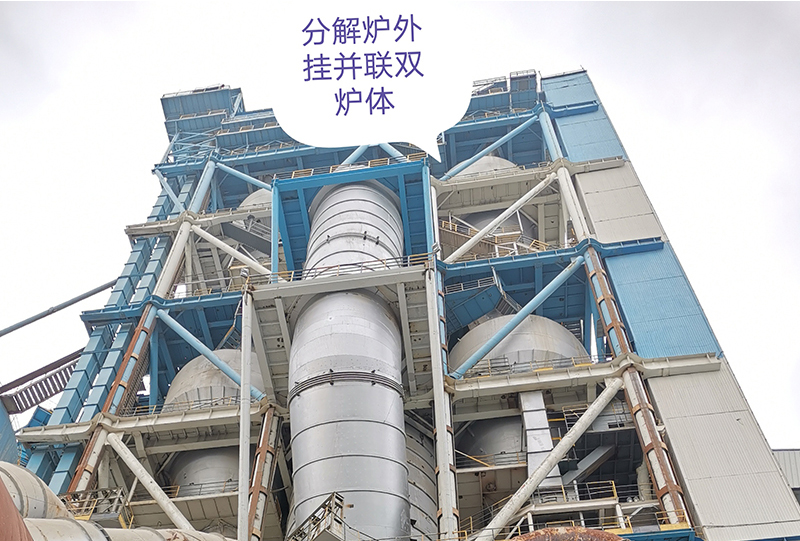
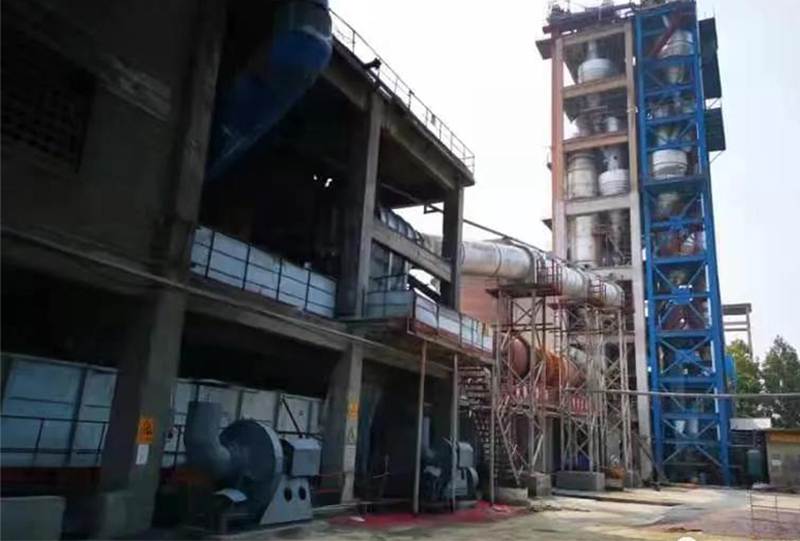
New technologies for greatly saving energy, reducing consumption and increasing production of cement kiln with calciner system
——Only change the structure of calciner combustion chamber, feed end chamber and some points of preheater , and the clinker output will be increased by more than 20%
Ⅰ Starting point of technological transformation
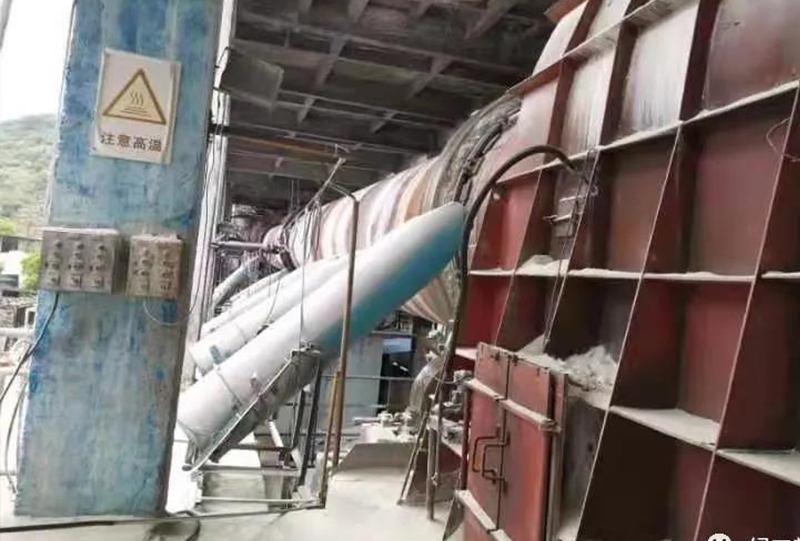
For the decomposition system outside the kiln, although the outlet air duct of almost all manufacturers is long enough and the volume of the decomposition furnace is large enough, the temperature of the outlet air pipe of the decomposition furnace is generally higher than that of the decomposition furnace in production and operation. Sometimes, the C5 outlet temperature is higher than the outlet temperature of the decomposition furnace, and the so-called temperature is inverted, and the temperature once is inverted, the system can no longer inject energy (i.e. no wind or fuel), and the system output cannot be increased any more. The reason for this problem is that the fuel combustion in the decomposition furnace is not enough, which not only reduces the fuel burn-off rate (i.e. the heat consumption increases), but also increases the risk of blockage and skin formation of the upper cyclone. In order to solve this problem, in addition to reducing the fineness of fuel , increasing the temperature of the tertiary air and the temperature of the feed end chamber , it is crucial to increase the oxygen contact opportunity of solid fuel (pulverized coal or petroleum coke) in the combustion chamber of the decomposition furnace, and optimize the relationship between the combustion time of the fuel in the decomposition furnace and the residence time of raw materials.
Ⅱ Analysis of key technical points
1、 When the solid fuel at normal temperature enters the calciner combustion chamber under the transportation of
primary air, the environment it faces is not only the high temperature flue gas with a small amount of excess air from
the kiln tail, but also the hot air from the tertiary air duct; There are not only the heat exchange raw material from C4
discharge pipe, but also a small amount of CO2 produced by combustion of calciner fuel and decomposition of raw
material. In this complex environment, high temperature and oxygen enrichment are obviously favorable conditions
for fuel to start combustion as quickly as possible in the calciner combustion chamber and increase the combustion
rate as much as possible, while the distribution concentration of raw meal in flue gas and CO2 content are
unfavorable conditions to prevent combustion. Therefore, in order to make the fuel fully burn in the furnace, we must
find ways to give full play to the favorable conditions and prevent the unfavorable conditions as soon as the fuel
enters the combustion chamber.
2、 Although the oxygen enriched environment is conducive to combustion, due to the limitation of relative NOx
emission, it is impossible to supply too much oxygen into the system no matter from the kiln or the tertiary air duct,
or from the primary air or the air leakage. Therefore, when the fuel enters the calciner combustion chamber, how to
make the fuel quickly contact with oxygen without interference under the limited O2 supply condition, It becomes a
necessary condition to improve the burning rate.
3、 In general, the residence time of raw meal in the calciner is about 3s, while the combustion time of solid fuel
(pulverized coal or petroleum coke) in the calciner is between 4s and 5s; The grinding fineness of solid fuel is much
finer than that of raw meal, and its density is also small. Therefore, once the fuel is not completely burned in the
furnace, the residence time of unburned part in the furnace is less than that of raw meal, that is, the unburned part
must escape from the decomposition furnace before raw meal, which will inevitably lead to the phenomenon of skin
blockage in C5 or C4 or even C3 combustion. Therefore, it is necessary to make the fuel "burn first" and the raw meal
"follow" as far as possible.
4、 The high temperature of kiln end and tertiary air is the primary condition to improve the combustion efficiency of
calciner combustion chamber. The high temperature of the tertiary air should be guaranteed by the high temperature
of the kiln head, which is related to the heat exchange efficiency of the grate cooler. However, the high temperature
at the end of the kiln often leads to frequent scaling in the feed end chamber, especially for the batching scheme with
large liquid volume. The scaling of the feed end chamber will increase the wind speed and resistance of the overload
section at the end of the kiln, which will certainly reduce the amount of flue gas carrying high temperature enthalpy,
which is obviously not conducive to the improvement of the combustion efficiency of the calciner combustion chamber.
5、 The production practice after the technical transformation shows that the production can still be carried out stably
when the maximum wind speed in the outlet pipe of the cyclone reaches 24m /s. However, the general production
line can not effectively improve the output due to the low fuel combustion efficiency in the calciner and the fear of
injecting too much energy into the calciner, which leads to that the wind speed of the cyclone outlet duct can not
reach 22m/s. The reason for this phenomenon is not because of the insufficient capacity of the cyclone and the outlet
duct, but because the fuel combustion efficiency of the calciner is not high enough.
It can be seen from the above that the clinker output can be increased again by scientifically optimizing and
improving the combustion efficiency of calciner combustion chamber.
Ⅲ Specific technical transformation scheme
1、 Change the structure of the calciner combustion chamber to extend the movement of fuel in the combustion
chamber; In order to make fuel burning space, the position of C4 blanking point should be improved and the
spreading method should be improved. The purpose of these two changes is to optimize the relationship between the
combustion time of fuel in the calciner and the residence time of raw meal, so that the fuel can be "burned first" and
the raw meal can be "followed after".
2、 By reforming the masonry form of the feed end chamber, adopting the anti scaling microcrystalline board and
nano heat insulation board, and reducing the thickness of the refractory by 40%, which not only increases the space
of the feed end chamber , but also make the thermal system stablility without high-temperature scaling in the
production, so that the output can be steadily increased again.
3、 Change and expand the inlet of the upper cyclone (that is, the outlet of the duct of the lower cyclone) to meet
the production requirements.
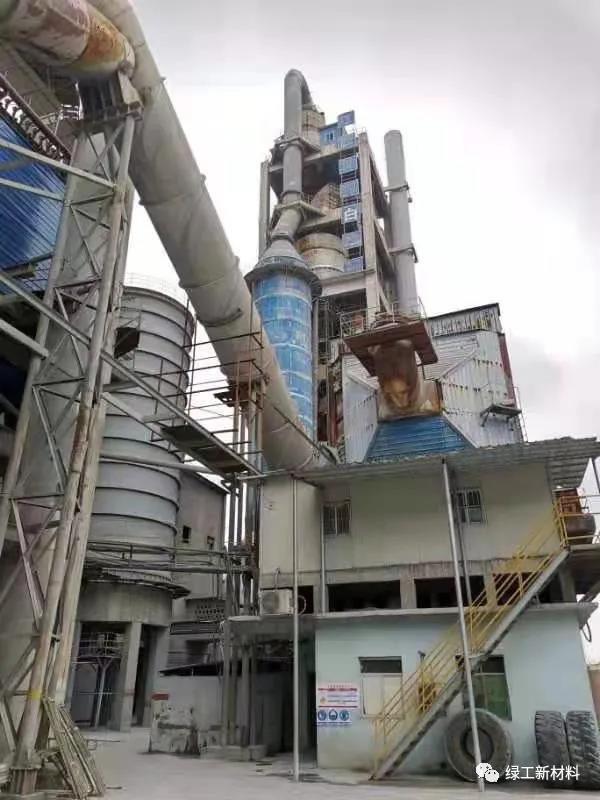
Only change the structure of calciner combustion chamber, feed end chamber and some point of preheater , and the clinker output will be increased by more than 20%——We have achieved success. Welcome to visit the site.
Shandong Green Engineering New Materials Technology Co.,Ltd
Company website: www.lgxcltech.com
Email: gudaofa@163.com
Wechat:gudaofa
Contact: gudaofa
Phone: +86 18353360679
Tel: +86 13953348649
Email: gudaofa@163.com
Add: Room 1109, Block B, Runde Building, No. 6, Xinhuan East Road, Mashang Street Office, Zhangdian District, Zibo City, Shandong